
|
||||
| Prev |
 Guatemala 2000 A photo journal by David Booth |
Next | ||
|
|
||||
|
|
||||
| Prev |
Guatemala 2000 A photo journal by David Booth |
Next | ||
|
|
||||
At last we arrived in Nuevo Mexico for our three-day stay with returned refugees. The WFP team leaders have made arrangements for us to stay with selected village families -- two or three delegates per family. My dad, WFT team leader Jesse and I stayed with a family of ten: two parents, seven children, and one grandchild. We didn’t want to be a drain on the resources of our host families, so we all brought a few basic food supplies to offset our consumption during our stay: some rice, beans, tomatoes and onions.
The village of Nuevo Mexico consists of about 100 families from seven different ethnic groups. All are returned refugees. The families did not know each other before arriving here from their refugee camps in Mexico or other neighboring countries, and they are not all from the same areas of Guatemala originally. Our WFP team leaders were careful to ensure that those of us who did not speak Spanish were paired with someone who could translate, as none of the families spoke any English. In fact, many of these villagers didn't even speak Spanish: they spoke various indigenous languages, such as Quiche or Kekchi.
The homes are dispersed in Nuevo Mexico, with rough paths connecting them. Individual homes do not have running water or electricity, but they do have some electricity for a few shared services.
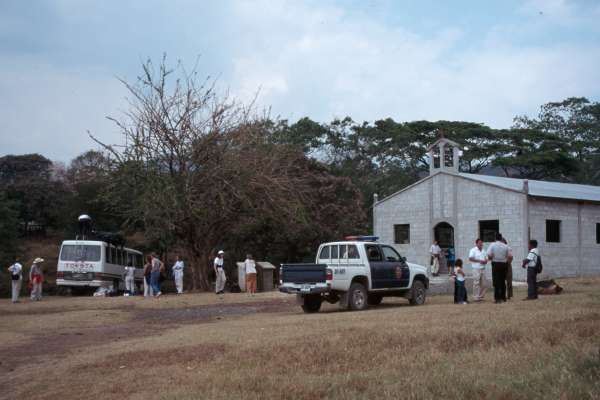 We arrive in Nuevo Mexico. On the left is our van. The police escort truck is
on the right, in front of the church.
We arrive in Nuevo Mexico. On the left is our van. The police escort truck is
on the right, in front of the church.
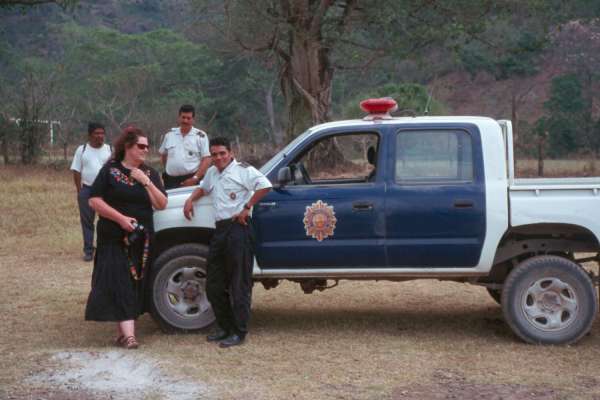 Joanne thanks the driver of our police escort.
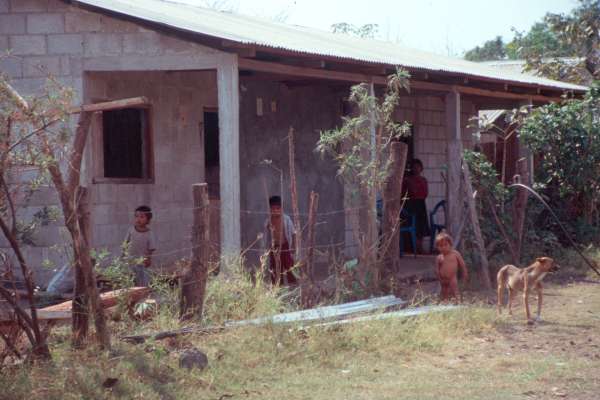 A home in Nuevo Mexico. Some are built from concrete blocks, others from wood.
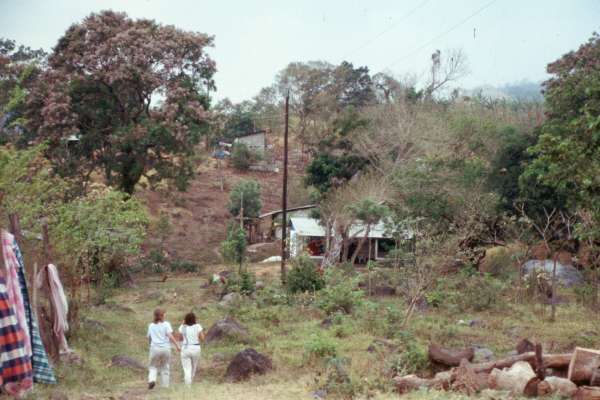 Cynthia and Marinetta walk off to find their assigned host family.
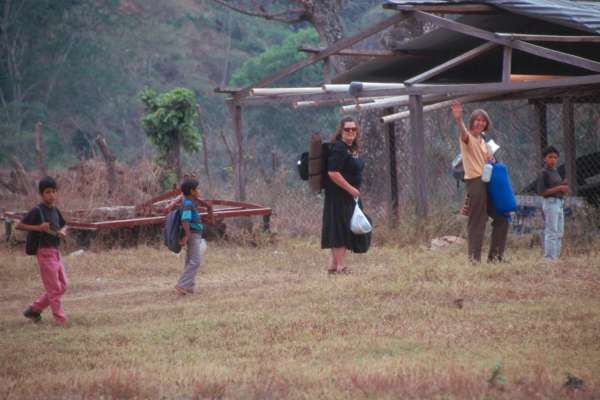 Joanne and Catherine (waving) head for their host family.
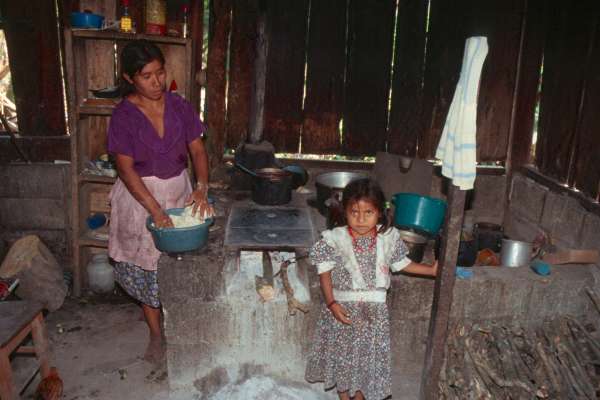 We arrive at our host family’s home as the mother, Vincenta, 36, is preparing
to make tortillas. A daughter
Anaberta, 6, gazes at us with curiosity.
We arrive at our host family’s home as the mother, Vincenta, 36, is preparing
to make tortillas. A daughter
Anaberta, 6, gazes at us with curiosity.
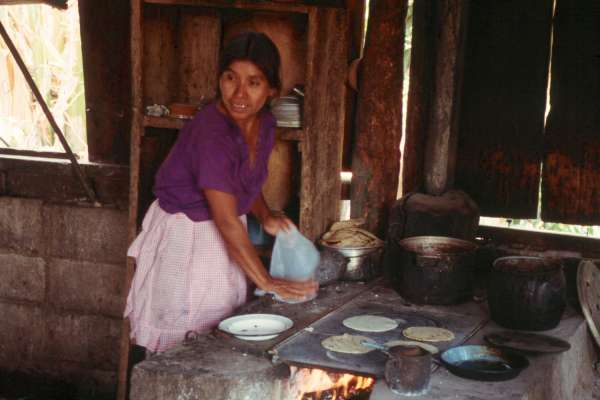 Vincenta pats out tortillas and bakes them on a wood cooking stove. The stove has no chimney: the smoke
goes out through openings in the corrugated metal roof. The walls of the house are just
a single layer of vertical boards, with gaps between them about an inch wide,
so there is plenty of ventilation.
Vincenta pats out tortillas and bakes them on a wood cooking stove. The stove has no chimney: the smoke
goes out through openings in the corrugated metal roof. The walls of the house are just
a single layer of vertical boards, with gaps between them about an inch wide,
so there is plenty of ventilation.
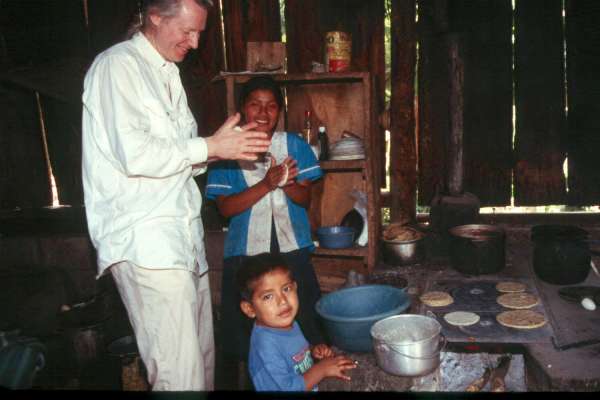 After washing my hands from a jug of water (the homes have no
running water or electricity),
I try my hand at making tortillas, much to the amusement of the oldest
daughter Vidalia, 18, in the background, and her brother Otto, 4.
After washing my hands from a jug of water (the homes have no
running water or electricity),
I try my hand at making tortillas, much to the amusement of the oldest
daughter Vidalia, 18, in the background, and her brother Otto, 4.
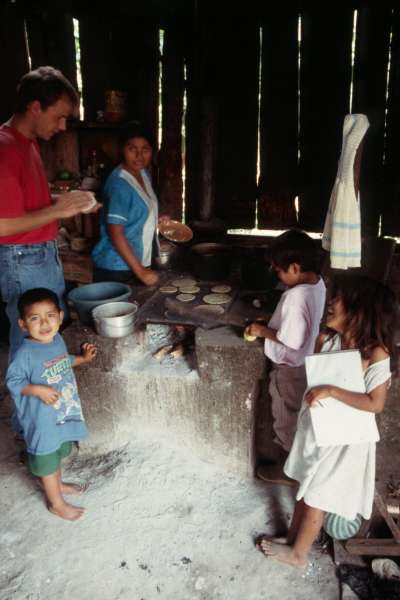 Team leader Jesse also takes his turn at making tortillas as more of the
family looks on, amused.
Team leader Jesse also takes his turn at making tortillas as more of the
family looks on, amused.
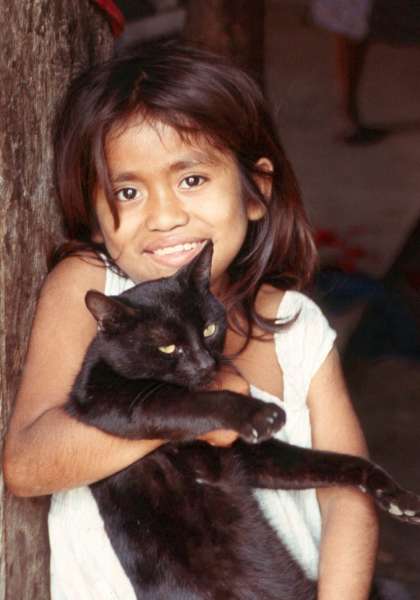 Daughter Eluvia, 8, shows us her cat.